Girls’ Education in India: 7 Things We Often Overlook
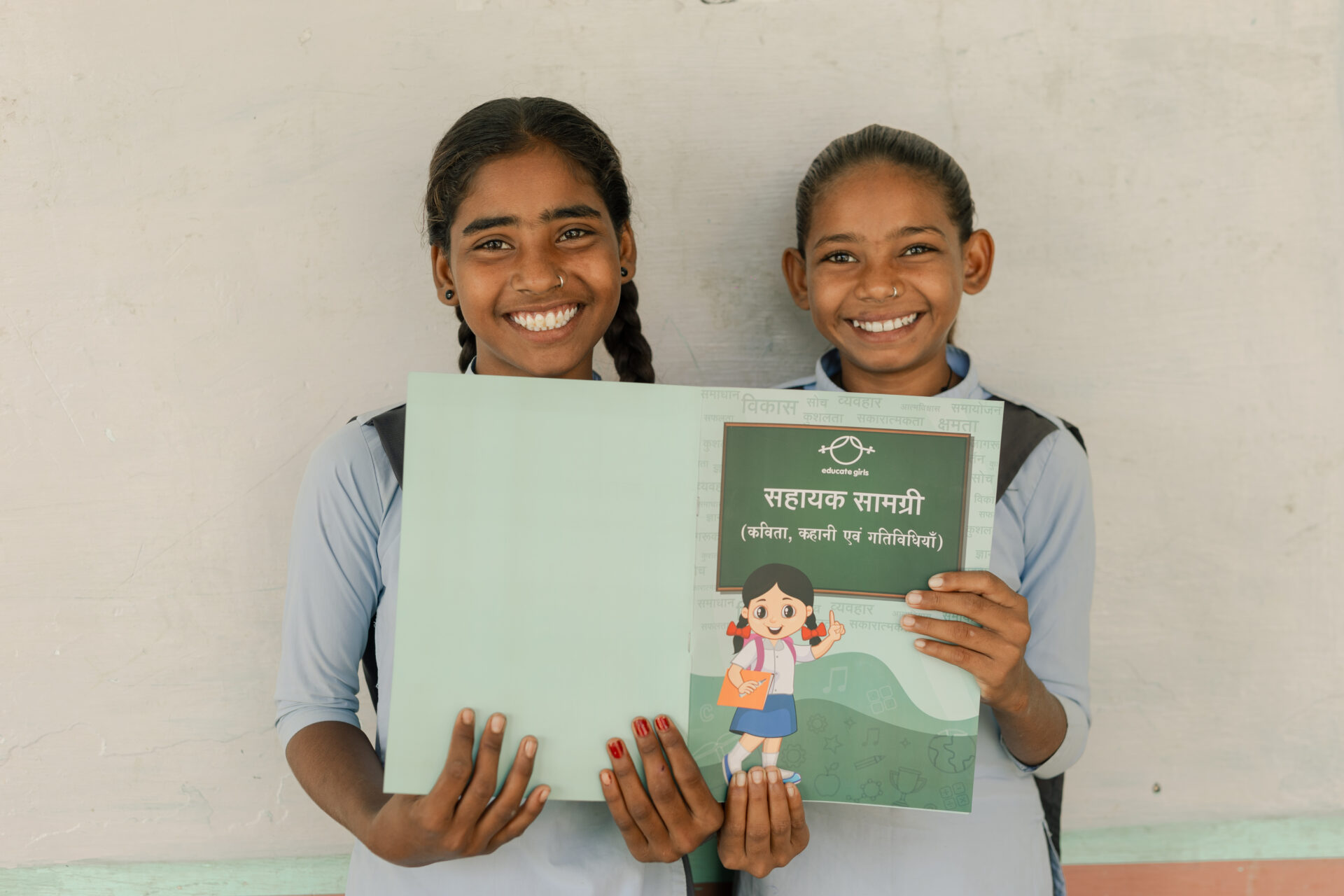
The story of girls’ education in India is no longer simply about getting girls through the school gate.
The Ministry of Education’s UDISE+ 2024–25 report records a Gender Parity Index was above 1 at every level of school education. This means that, in proportion to their population, girls had higher participation in school education than boys.
This is important progress. But aggregate national data cannot tell us which girls remain outside school, whether those who are enrolled attend regularly, what they are learning or whether they complete their education.
In rural India, a girl’s education can still be interrupted by distance, migration, household responsibilities, financial pressure, early marriage, social norms or difficulty navigating education systems.
Through years of working with communities to reach girls furthest from education, Educate Girls’ has learnt that every girl’s circumstances are different and that understanding those circumstances is essential to helping her continue or return to learning.
Here are seven realities that help us understand the ground realities of girls’ education in rural India.
1. Adolescence can create new barriers to continuing education
A girl may enter primary school and still never complete her education.
ASER 2024 found that in rural India, 2.3% of girls aged 11–14 were not enrolled in school. Among girls aged 15–16, that figure was 8.1%.[Source: ASER 2024]
Age can become a barrier, particularly when a girl has been out of school for several years and is older than the expected age for her grade. Adolescence can also bring new pressures around safety, household responsibilities, paid work and marriage.
The next school may be farther away. Families may become more concerned about safety. Household responsibilities may increase. Some girls begin paid work, while others face pressure to marry.
This is why enrolment in the early years cannot be our only measure of progress. Girls need support to remain in school, transition to higher grades and complete their education. When their schooling is interrupted, they also need realistic routes back to learning.
2. A school can exist and still be out of reach
Access to education is often measured by whether a school exists.
For a girl and her family, the calculation can be much more complicated.
In many rural communities, secondary schools are several kilometres away, while affordable public transport is limited or unavailable. For some families, concerns about a girl travelling alone particularly along an isolated or unsafe route can make regular attendance difficult.
In other cases, the barrier is administrative rather than physical. A missing document, an error in a school record or difficulty navigating re-enrolment can be enough to stop a girl from returning.
Access must therefore be judged by whether a girl can reach school safely, enrol without difficulty, attend regularly and learn not simply by whether a school exists.
Understanding that difference is central to improving rural education in India.
3. Economic pressure and household responsibilities can interrupt a girl’s education
The cost of education is not limited to fees, books or uniforms.
For many families, there is another calculation: what happens to the work a girl currently does if she goes to school?
Girls may care for younger siblings, fetch water, cook, work on farms or take on paid work when their families face financial pressure. Migration can interrupt schooling for months at a time.
Marriage can create another interruption. India’s latest completed National Family Health Survey, NFHS-5 (2019–21), found that 23.3% of women aged 20–24 had been married before the age of 18.[Source: NFHS-5, Ministry of Health and Family Welfare]
These realities matter because they remind us that asking whether a family “values education” can oversimplify the problem.
Gender norms do influence decisions, and they must be challenged. But those decisions are often intertwined with household economics, care responsibilities, safety and the choices available to a family.
Helping a girl continue her education therefore requires understanding the reality of her life beyond the classroom.
4. Enrolment does not guarantee learning
Getting a girl into school is essential. Ensuring that she learns once she gets there is equally important.
Looking at learning levels among rural children overall, ASER 2024 found that 48.8% of children in Grade 5 could read a Grade 2-level text, while 30.7% could solve a three-digit-by-one-digit division problem.[Source: ASER 2024 National Findings]
When children move through grades without strong foundational skills, learning becomes progressively harder.
For a girl already balancing responsibilities at home or irregular attendance, falling behind can create another reason to disengage from school.
This is why the conversation about girls’ education must include learning, not just enrolment.
At Educate Girls, our activity-based remedial learning curriculum, Gyan Ka Pitara, helps children strengthen foundational skills in Hindi, English and Math so they can participate more meaningfully in the classroom and continue learning.
5. Dropping out of school does not have to mean the end of education
Educational journeys are not always linear.
A girl may drop out because her family migrates. She may marry early. She may begin working. She may not have the confidence to return to the grade she left with passage of time. Years can pass before she gets another opportunity to study.
For these learners, simply saying “return to school” may no longer be realistic.
This is where second-chance education and open-schooling pathways become important.
Through the Educate Girls’ Pragati Program, adolescent girls and young women whose education was interrupted can return to learning and work towards a Grade 10 credential through open schooling, while continuing to manage the realities of work, family and daily life. Learn more about the Pragati Program
Rinku’s journey is one such example of how a mother of four rewrote her future through education after 16 years. Read Rinku’s story
The larger lesson is important for girls’ education in India, is that they can start, pause and restart their educational journey.
A girl should not lose the possibility of learning simply because her first educational journey was interrupted.
6. Data can help find girls who are being missed. People help bring them back.
One of the hardest questions in girls’ education is also one of the most basic: Where are the girls who are out of school?
Administrative enrolment numbers can tell us who is registered in school. Finding girls who have never enrolled, migrated, dropped out or disappeared from the system requires a much more local understanding.
Data can help identify geographies where exclusion is likely to be concentrated. Household surveys and local knowledge can then help identify individual girls.
But identifying a girl is only the first step.
A data point cannot sit with her parents and understand why she stopped studying. It cannot address a loved one’s concern about the safety, help a family navigate school documentation or return repeatedly when the first conversation does not change a decision.
That requires people.
At Educate Girls, Team Balika volunteers and field teams work door-to-door with hardest to reach families because bringing a girl back to education can take trust, repeated conversations and persistence.
Technology and data can make this work sharper. They do not replace the human relationships at its centre.
7. Lasting progress is built with communities
No organisation can improve girls’ education in isolation.
A girl’s educational journey is shaped by the people and systems around her: her family, school, teachers, community leaders, panchayat, local volunteers and government education system.
When these stakeholders see girls’ education as a shared responsibility, the conditions around a girl begin to change.
A parent may reconsider a decision to keep a daughter at home. A community volunteer may identify a girl who has dropped out. A school may help resolve an enrolment barrier. A panchayat leader may bring attention to girls who are being missed.
This is why community ownership has always been central to Educate Girls’ work.
The goal is to work alongside the people and systems already surrounding a girl’s families, volunteers, schools, panchayats and government so that her education becomes a shared priority.
What Girls’ Education in India Needs Next
India’s progress on girls’ education deserves recognition. Gender gaps in enrolment have narrowed and more girls have access to education.
The next challenge is more complex.
It is to find the girls who remain furthest from education. To make sure that enrolment leads to learning. To keep pathways open when poverty, migration, marriage or other life circumstances interrupt education. And to ensure that girls who could not complete school the first time have a way back.
At Educate Girls, our work spans this larger journey from identifying out-of-school girls and supporting their enrolment and retention, to strengthening foundational learning and creating second-chance pathways for learners who need another route to complete their education.
Because every girl’s journey may look different.
What must remain constant is her opportunity to learn.
Educate Girls
Posted on July 29, 2026
Interested in contributing towards educating girls?

Quick Links
Resources & More
Keep helping. Stay Updated.


Child Protection Policy | Privacy Policy | Terms of Use | Employee Login | IT Assets
Educate Girls is a project of Foundation To Educate Girls Globally (FEGG) | FEGG is registered in India under Section 8 of the Indian Companies Act, 2013.
© 2026 All rights reserved. Educate Girls.
